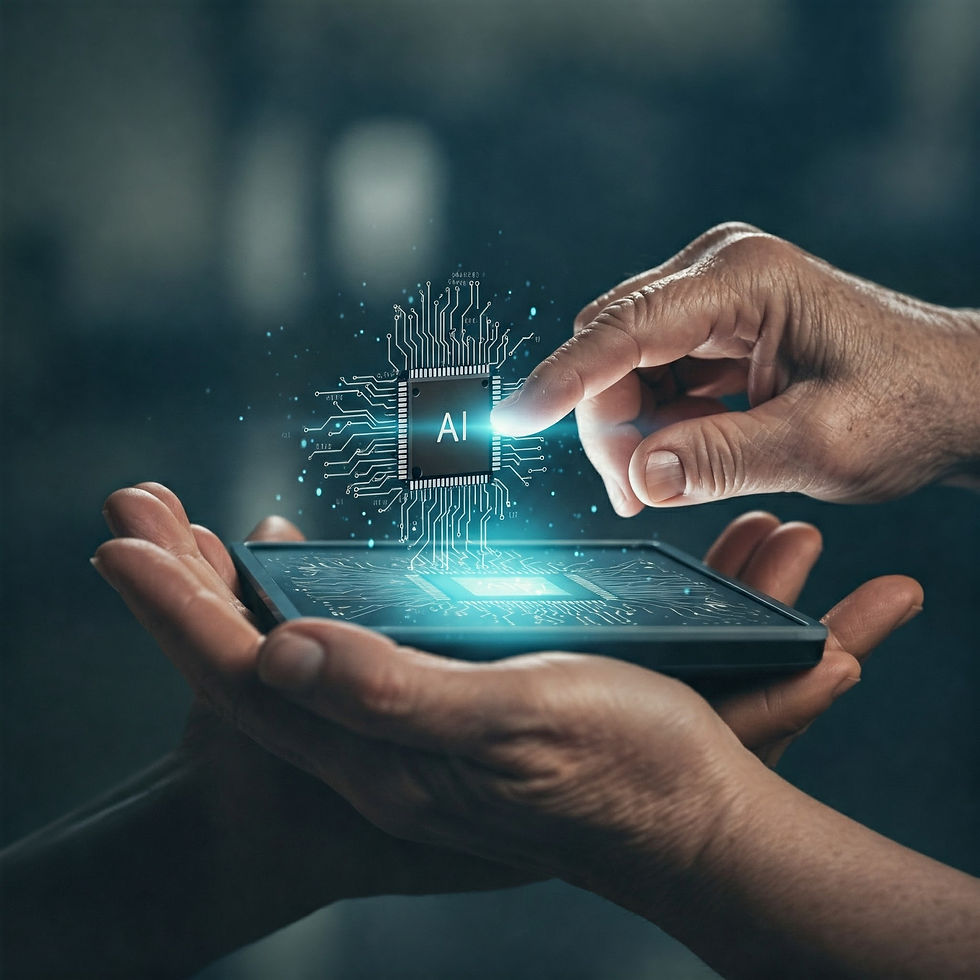
AI in Healthcare: Bridging Gaps and building Communities in Southern Africa

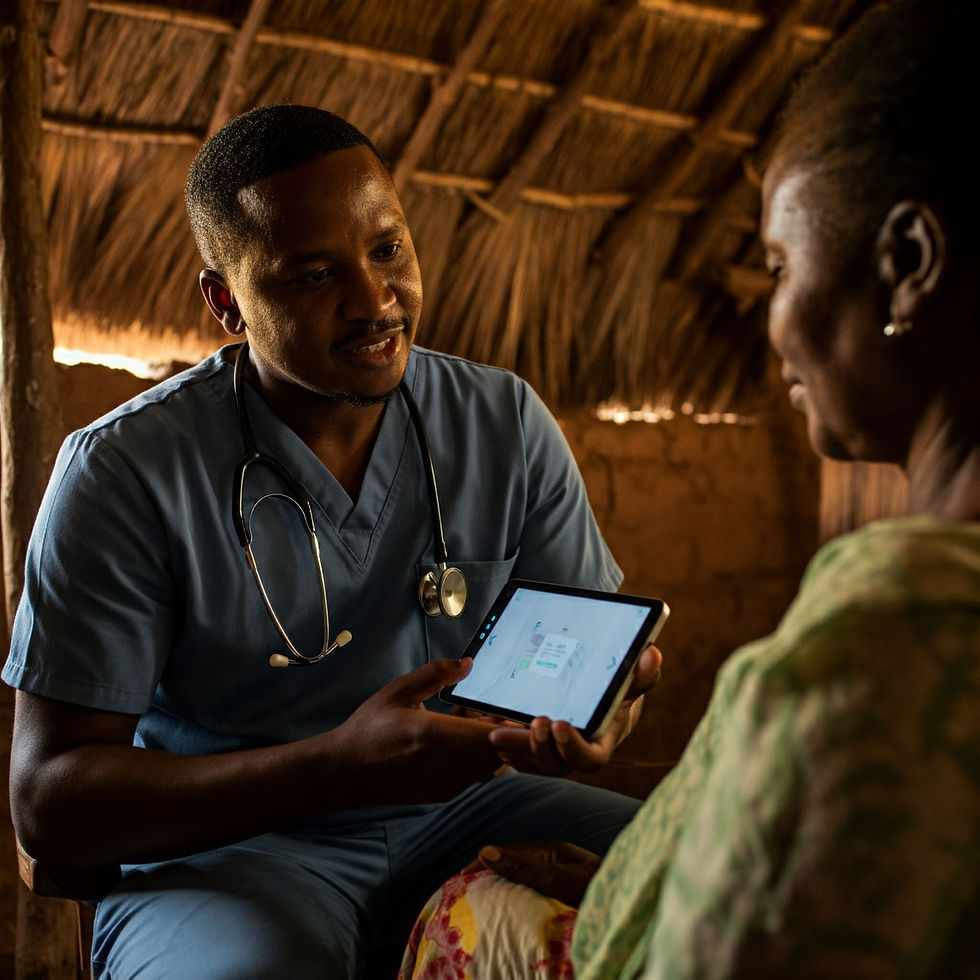
Imagine grandmother in a rural area walking three hours to a clinic, clutching her granddaughter’s hand. The child has a persistent cough, but the nearest doctor is 200 kilometers away. Enter AI in healthcare—a game-changer that’s transforming this scenario. Across Southern Africa, where 70% of the population lives in low-resource areas and fewer than 2 doctors serve every 1,000 people, artificial intelligence is no longer science fiction. It’s a lifeline.
But this isn’t just about flashy tech. It’s about blending algorithms with community wisdom and global innovation with local grit. In this post, we’ll explore how AI is reshaping healthcare in Southern Africa, balancing online marvels with offline resilience, and why your community’s role matters more than ever.
AI-Powered Diagnostics in your neighborhood:
Missed diagnoses kill. In Malawi, 45% of tuberculosis cases go undetected due to a lack of specialists.
The AI Fix: Machine learning models analyze X-rays, blood samples, or symptoms to flag diseases in minutes—even without the internet.
This can be Implemented by the Use of apps like Vula Mobile (South Africa), which lets nurses upload images to remote specialists. An Offline option would be doctor approved AI-generated decision trees (e.g., “If fever + joint pain, test for malaria”) for clinics without power.
In Mozambique, the AI for Good project uses offline tablets to diagnose diabetic retinopathy. Over 50,000 patients in remote areas have been screened annually, preventing blindness.
Telemedicine: When the Doctor is a Text Away
Rural patients spend 20% of their income on transport to urban hospitals.
Telemedicine apps help solve this by connecting patients to doctors via video calls, chatbots, or SMS.
To Implement this deploy WhatsApp-based platforms like MedTech Botswana for urban zones with stable internet. Offline options include the use of USSD codes (e.g., *Dial *123# for HIV advice*)—no smartphone or data required.
Namibia’s PharmCare sends prescription reminders via SMS. HIV patients using the service saw a 40% jump in medication adherence. NguniCare a cardiovascular health app targets underserved communities.
Drug Discovery: Merging Labs with Traditional Medicine
Imported drugs are costly. Yet Southern Africa has 10,000+ medicinal plants—most untested. There are algorithms predict how local herbs (like Zimbabwe’s Mufandichimuka) interact with diseases.
A great strategy would be to partner with universities to digitize traditional knowledge and IKS of the TIA to ensure the owners of the information are credited for their efforts. Use offline data loggers to record healers’ remedies.
South Africa’s Deep Medicines Initiative identified anti-diabetic compounds in Sutherlandia, a herb used for centuries by the Khoisan people.
Turning Paper into Digital Gold
Clinics drown in paper files. Malawi’s TB records had a 35% error rate pre-AI. A great fix is optical Character Recognition (OCR) digitizes handwritten notes. Predictive models flag outbreaks.
Malawi’s Ministry of Health slashed TB reporting errors by 60% using AI-driven data tools.
Community Health Workers Team up with AI
CHWs serve 80% of rural health needs but lack training tools. There are apps which provide real-time guidance (e.g., “Check for anemia if eyelids are pale”).
In Lesotho, CHWs using AI protocols boosted antenatal visits by 25% in one year.
Fighting Bias with Local Voices
AI trained on European data misdiagnoses darker skin tones. Local communities must be involved and included in building datasets. This can be achieved by partnerships with NGOs like Zimbabwe AI Ethics Collective to audit tools. Also the compensation traditional healers for sharing knowledge, along with giving credit for their contributions.
Kenya’s AfyaAI (now expanding regionally) reduced breast cancer misdiagnoses by 22% using crowdsourced African data.
Cutting Costs with AI
Hospitals waste 15% of budgets on equipment breakdowns. AI aids on predictive maintenance alerts staff to fix MRI machines before they fail.
Implementation involves the use of solar-powered AI sensors to monitor vaccine fridges. Manufacturers can train locals to repair devices using approved AI-generated tutorials.
A Zambian hospital saved $50,000 annually by using AI to schedule MRI maintenance.
Homegrown AI Talent
Only 12% of African AI researchers are women. To mitigate this Free courses and local hubs must be made available to train nurses, coders, and entrepreneurs.
Botswana’s Digital Academy upskilled 500 nurses in AI basics in 2023—50% were women.
Pandemic Preparedness with AI
COVID-19 overwhelmed South Africa’s ICUs. But AI help with models that predict outbreaks by tracking climate, travel, and symptoms. AI dashboards can be created and broadcast alerts via community radio or on social media in local languages.
South Africa’s COVID Connect chatbot advised 2 million users during peaks, reducing ER visits by 18%.
The Future is Hybrid—and Human
AI in healthcare isn’t about robots replacing sangomas or apps erasing face-to-face care. It’s about tools that amplify Southern Africa’s greatest resource: its people. From the mother in Malawi using a solar-powered diagnostic kit to the healer in Limpopo contributing herbal data, every community member holds a piece of the puzzle.
But the road ahead demands collaboration. How will we ensure AI respects Ubuntu principles? Can startups and spaza shops team up to fund rural tech hubs? And will Southern Africa pioneer a model where AI serves the many, not the few?
Ask Yourself
1. Could your local clinic partner with a tech college to build an AI tool?
2. How might traditional healers and data scientists co-create solutions?
3. What’s one offline method your community could adapt to bridge the digital gap?
Keywords: AI in healthcare, AI-powered diagnostics Southern Africa, telemedicine offline solutions, ethical AI healthcare Africa, community health workers AI tools.
Together, let’s build a healthier, tech-empowered Southern Africa—one algorithm, one community at a time. 🌍💻
Comments